

- What are Fibroids?
- How are Fibroids treated?
- What does emolisation involve?
- Why Choose Diagnostic Radiological Services for Treating Fibroids?
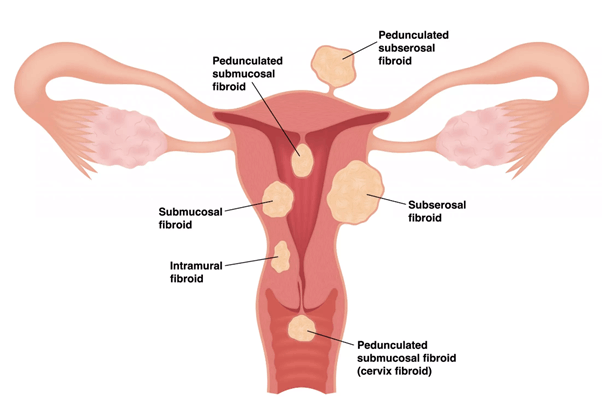
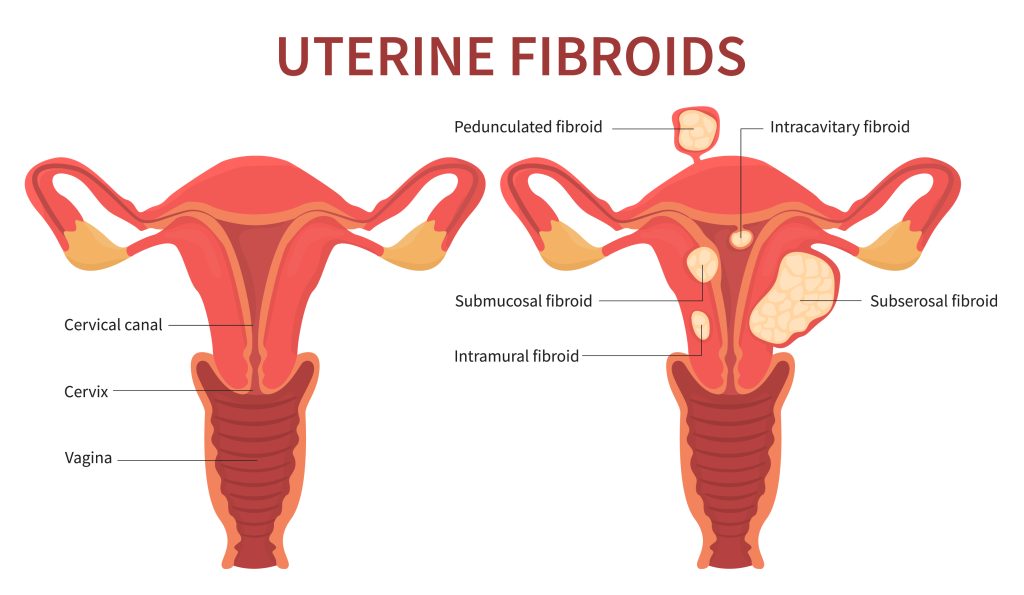
Fibroids, also known as uterine leiomyomas, are benign (noncancerous) growths that develop inside the uterus or within its muscular wall. They can vary in size from as small as a pea to as large as a melon. Multiple fibroids may appear at once, and they are classified according to their location within the uterus.
Fibroids are very common, affecting between 20% and 40% of women over the age of 35. While many women do not experience symptoms, fibroids can cause discomfort and complications for others.
Common Symptoms of Fibroids
- Heavy or regular menstrual bleeding
- Pelvic pain or pressure
- Abdominal heaviness, cramps, or swelling
- Pain during urination or bowel movements
- Fertility issues
It’s important to note that these symptoms do not always mean fibroids are present. A pelvic examination, ultrasound scan, or MRI is needed for an accurate diagnosis.
Fibroid treatment depends on the size, location, and severity of symptoms. Many fibroids are asymptomatic and do not require intervention. For symptomatic cases, the following treatment options are available:
Medication
- Anti-inflammatory drugs or anti-haemorrhagic medication can reduce symptoms.
- Hormonal treatments may also help, but are generally temporary and may cause side effects.
Surgical Removal
- Myomectomy: Individual removal of fibroids through techniques such as coelioscopy, hysteroscopy, or abdominal incision.
- Requires hospitalisation and weeks of recovery.
- Can affect fertility due to scarring of uterine tissue.
- Hysterectomy: Removal of the entire uterus, either via surgery or vaginal approach.
- Permanently eliminates fibroids.
- Long hospital stay and recovery.
- Ends the possibility of pregnancy.
Embolisation (Uterine Artery Embolisation)
At Diagnostic Radiological Services, we specialise in embolisation, a minimally invasive, uterus-sparing alternative to surgery.
- Performed under mild local anaesthesia.
- Requires only a short hospital stay (approximately two days).
- Pain is managed with medication or patient-controlled devices.
- Patients typically return to normal activities within one to two weeks.
- Fertility is generally preserved, though embolisation is not yet licensed as a treatment for infertility caused by fibroids.
Before the Procedure
- A complete medical and gynaecological examination.
- Imaging (ultrasound or MRI) to determine the number, size, and location of fibroids.
- Pre-treatment tests to determine the most suitable anaesthesia and pain management.
During the Procedure
- Performed by an interventional radiologist.
- You remain conscious with pain-control medication provided.
- A catheter is inserted into an artery in the groin.
- Using X-ray guidance, the catheter is advanced to the uterine artery.
- Tiny particles (the size of grains of sand) are injected to block the blood supply to the fibroids.
- The fibroids shrink over time, reducing symptoms.
After the Procedure
- Hospital stay of one to two days for pain management and monitoring.
- Return to work within seven to ten days.
- Possible mild fever, fatigue, or light bleeding in the months following.
- Rarely, fibroids may be expelled naturally.
- Follow-up checkups at one month and six months after treatment.
- Imaging (ultrasound or MRI) is performed between three and six months to assess results.
Why Choose Diagnostic Radiological Services for Treating Fibroids?
- Minimally invasive expertise: Specialists in embolisation and interventional radiology.
- Uterus-preserving approach: Effective fibroid treatment without removing the uterus.
- Shorter recovery: Return to your normal lifestyle in just one to two weeks.
- Personalised care: Collaboration between interventional radiologists and gynaecologists for optimal outcomes.
- Advanced imaging: High-tech equipment ensures precise diagnosis and treatment.