
- What is a PET-CT scan
- How long does a PET scan take?
- What you can expect
- What are the risks and side effects of a PET scan?
- Why Choose Diagnostic Radiological Services for Your PET Scan?
PET-CT
A PET scan (Positron Emission Tomography) is a highly advanced imaging test that reveals the metabolic and biochemical activity of tissues and organs. By using a safe, low-dose radioactive tracer, a PET scan shows both normal and abnormal cellular activity, often identifying diseases earlier than traditional imaging tests such as CT or MRI.
Because it highlights changes in metabolic function, a PET scan is especially valuable in diagnosing and monitoring conditions such as cancer, neurological disorders, and heart disease. The tracer naturally collects in areas of higher activity, allowing specialists to pinpoint potential health concerns with accuracy.
In most cases, PET images are combined with CT or MRI scans to provide even more detailed results, known as PET-CT or PET-MRI. This combined approach offers precise anatomical and functional imaging for more accurate diagnosis and treatment planning.
How long does a PET scan take?
A PET scan usually takes about two hours from start to finish.
- Preparation and counselling: Allow 30 minutes before the injection for informed consent and preparation.
- Tracer absorption: After the injection, you’ll sit quietly for about 60 minutes while your body absorbs the radiotracer.
- Imaging: The actual scan takes around 30 minutes.
- Review: A technologist checks the quality of the images before you leave.
What to Expect During a PET Scan
- You’ll receive an IV injection of a radiotracer (most often fluorodeoxyglucose – FDG).
- You will rest in a chair for about an hour while the tracer circulates. Movement is restricted to avoid interference with results.
- If you’re undergoing a PET-CT scan, you may also be given contrast dye for clearer vascular imaging.
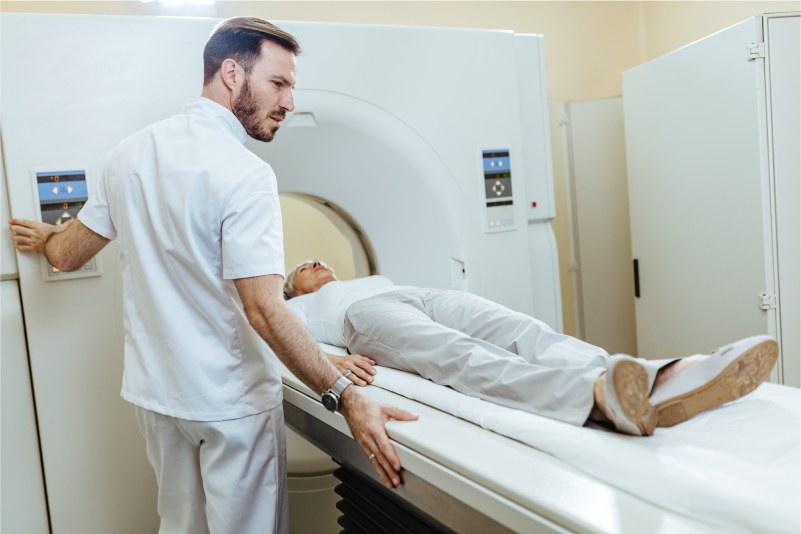
- During the scan, you’ll lie on an exam table that slides in and out of the PET/CT scanner, shaped like a large doughnut.
- The procedure is painless, but you must remain still to ensure clear images.
Risks and Side Effects of a PET Scan
- PET scans are considered very safe, with minimal risks.
- The tracer involves a small dose of radiation that leaves your body within hours. Drinking water helps flush it out quickly.
- Pregnant and breastfeeding women should avoid PET scans, as radiation may affect the baby or pass into breast milk.
- Rare allergic reactions may occur to either the tracer or CT contrast dye, but medical staff are trained to manage this immediately.
- Diabetic patients may require an adjusted diet or medication before the scan for accurate results.
- Advanced PET-CT technology for precise imaging
- Experienced radiologists and technologists
- Safe, patient-focused care
- Fast, reliable results for your doctor
- Convenient locations across Johannesburg
AVAILABLE AT THE
FOLLOWING BRANCHES

Book Your PET Scan Today
If you need a PET scan, Diagnostic Radiological Services is here to provide safe, accurate, and timely imaging. Our expert team ensures your experience is as comfortable as possible, with clear results delivered quickly to your doctor.
Contact us today to schedule your PET scan and take the next step in your healthcare journey.